
Spend a few minutes in any car care forum and you will find the same debate running in circles. One group swears by ceramic coatings. Another insists nothing beats protection film. Both sides post photos of beading water and glossy paint, and newcomers are left more confused than when they started.
Part of the confusion comes from treating the two as direct competitors. They are not. They are designed to solve different problems, and in many cases they work best together. Understanding what each one actually does makes the decision much clearer.
Two Very Different Materials
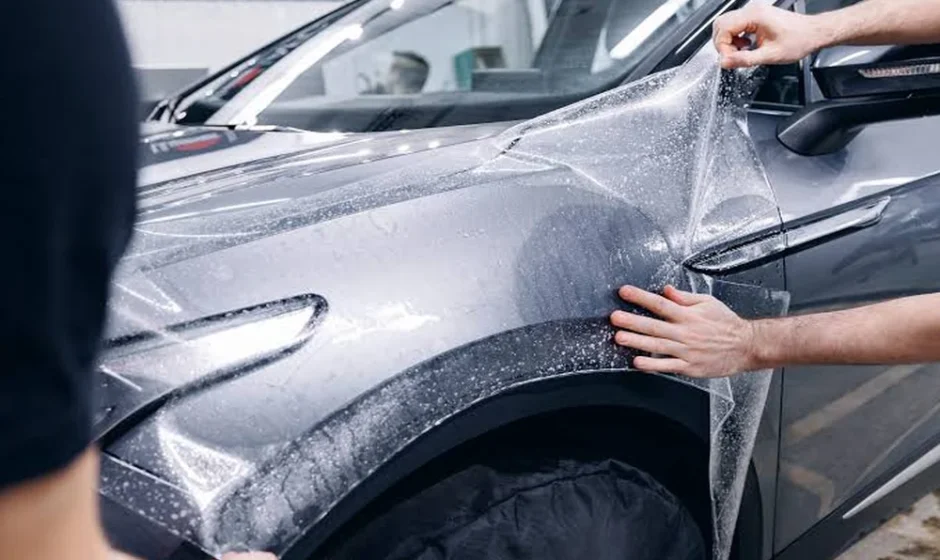
Protection film is a physical layer. It is usually made from thermoplastic polyurethane and has a measurable thickness. It is applied as a sheet, stretched over panels and held in place with adhesive.
A ceramic coating is a liquid applied to the paint that cures into a very thin, hard layer bonded to the surface. It is far thinner than film and works at the level of surface chemistry rather than physical bulk.
That difference in form explains most of the difference in performance.
Protection Against Stone Chips
This is where the gap is widest. A layer of ppf clear film absorbs the energy of small stones and road debris. When a stone hits a filmed bonnet, the film flexes and spreads the force, often preventing damage to the paint underneath.
A ceramic coating cannot do this. It is too thin to absorb a meaningful impact. A stone that would chip bare paint will usually chip coated paint as well.
For drivers who cover a lot of miles on motorways or rural roads, this single difference often settles the question for the front of the car.
Scratches and Swirl Marks
Film generally offers better protection against scratches. Its thickness means light contact often marks only the film, not the paint. Many films also have a self-healing top coat, allowing fine marks to soften with heat.
Ceramic coatings are harder than clear coat and can resist some light marring from washing. However, once scratched, they do not heal. Deeper scratches pass through them to the paint.
Gloss and Appearance
Ceramic coatings are known for enhancing gloss. They can make paint look deep and reflective, and they help maintain that look between washes.
Quality clear film should be nearly invisible, preserving the paint’s appearance rather than dramatically changing it. Some films have excellent gloss, but enhancement is not their main purpose.
Owners who care most about a showroom-level shine across the whole car often appreciate what a coating adds.
Water Behaviour and Easy Cleaning
Both can offer water-repellent properties. Ceramic coatings are well known for strong water beading and for making dirt release easily. Many modern films now include hydrophobic top coats as well, narrowing the difference.
In everyday terms, both make washing easier compared with unprotected paint.
Chemical and Stain Resistance
Coatings resist many contaminants, such as bird droppings and road grime, by making it harder for them to bond to the surface. Film provides a physical barrier, and its top coat is designed to resist staining.
In both cases, prompt removal of contaminants is still important.
Lifespan and Maintenance
Quality film can last many years before needing replacement, depending on climate and care. Coatings vary widely in durability; some last a year or two, others longer, and many benefit from maintenance products or periodic topping up.
Film requires gentle washing and attention to edges. Coatings require regular washing with suitable products to maintain performance.
Cost
Film usually costs more, particularly for large areas, because of material and installation labour. Coatings are generally less expensive to apply across a whole car.
When comparing cost, it helps to think about what each one prevents. Film can prevent chip repairs and paint correction on high-impact areas. A coating mainly reduces cleaning effort and helps preserve gloss.
Removal and Reversibility
Film can be removed by a professional when it reaches the end of its life, ideally revealing paint in the same condition as when it was applied. It can also be replaced panel by panel if one area is damaged.
Coatings wear gradually rather than being removed in one piece. Removing a coating completely usually requires machine polishing, which takes off a small amount of clear coat. This is not normally a problem, but it is worth understanding that the two products age and end their lives in very different ways.
Using Both Together
Many owners and detailers recommend a combined approach. Film is applied to areas most exposed to impacts, such as the front bumper, bonnet, wings and mirrors. A coating is then applied to the rest of the car and, if compatible, on top of the film.
This gives chip protection where it matters most and easy cleaning everywhere. It also helps the car look consistent, with similar water behaviour across all panels.
Compatibility is important. Not every coating suits every film. Installers can advise on products that work well together.
Which Should You Choose?
Choose film if
You drive regularly on fast roads, want to prevent stone chips, own a new or high-value car, or plan to keep the car for many years in excellent condition.
Choose a coating if
Your main goals are gloss and easier cleaning, you drive mostly in town at lower speeds, or your budget is limited.
Choose both if
You want the most complete protection and appearance, and you are willing to invest in both.
Questions to Ask Before Deciding
How and where do you drive most often? How long will you keep the car? Is chip protection or gloss more important to you? What is your budget? Which film and coating does your installer recommend, and are they compatible?
Answering these questions honestly is usually enough to point in the right direction.
Not a Contest, But a Choice
The film versus coating debate often misses the point. Film is about physical protection. Coatings are about surface performance and appearance. Each does something the other cannot.
For many owners, the best result comes from understanding those strengths and using each where it makes the most sense. That way, the car is protected from damage and easier to keep looking its best.