
https://www.nvautocare.com/
Truck Fuel Tank Corrosion: How Small Problems Can Lead to Expensive Fleet Downtime
For haulage businesses and fleet operators, fuel tanks rarely attract much attention until something goes wrong. They’re expected to withstand thousands of miles, changing weather conditions, road debris and the everyday demands of commercial transport.
However, an ageing or damaged fuel tank can create problems that extend well beyond the cost of the replacement part.
Corrosion, loose mounting brackets, damaged connections and contaminated fuel can all affect a truck’s reliability. Recognising these issues early can help operators avoid unexpected downtime and make more informed maintenance decisions.
Why fuel tank condition matters
A commercial truck’s fuel tank operates in a demanding environment. Road salt, moisture, vibration and debris can gradually affect exposed surfaces, particularly around mounting points and areas where dirt collects.
External corrosion is not always immediately serious. Light surface rust may be manageable, but deeper deterioration around welded seams, brackets or connections deserves closer attention.
Fuel tanks also experience regular movement and vibration. Over time, mounting straps and protective components can wear, allowing parts to rub against one another.
For fleet managers, routine inspections should therefore involve more than checking whether fuel is leaking.
The overall condition of the tank and its supporting components matters.
The warning signs operators should investigate
One of the clearest warning signs is visible fuel staining around a tank, connection or mounting area.
However, other symptoms may be less obvious.
An unexplained fuel smell, recurring contamination in fuel filters or damage around the tank supports can indicate that further investigation is necessary.
A truck exposed to harsh winter conditions may also develop corrosion in areas that are difficult to see during routine servicing.
Where significant deterioration is present, replacing the tank may be more practical than attempting repeated repairs.
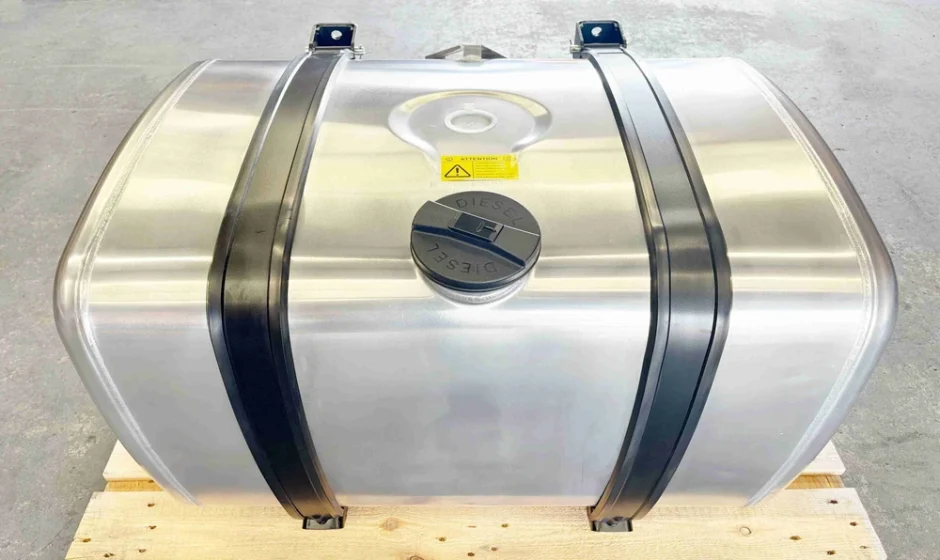
Businesses sourcing replacement Truck Fuel Tanks should establish the correct tank specification before ordering, particularly when operating mixed fleets.
Why compatibility is more complicated than tank capacity
Two tanks may have a similar appearance and fuel capacity without being interchangeable.
Mounting arrangements, overall dimensions, filler-neck positions, connection points and clearance around neighbouring components can differ between vehicle models.
The truck’s chassis configuration can also affect the available installation space.
For this reason, operators should avoid choosing a replacement solely because its advertised capacity matches the existing tank.
Vehicle manufacturer, model, production year and relevant part numbers should all be checked.
Photographs of the existing tank and its connection points can help parts suppliers identify a suitable replacement.
For businesses running DAF vehicles, the dedicated Fuel Tanks for DAF range provides a useful starting point when researching model-specific options.
Preventative maintenance can reduce disruption
A simple inspection routine can help identify deterioration before a vehicle is taken out of service.
During planned maintenance, technicians can examine tank surfaces, mounting brackets, straps, fuel lines and accessible connections.
Areas where dirt and road salt accumulate deserve particular attention.
Any suspected fuel leak should be handled promptly and safely by appropriately qualified personnel. Fuel-system repairs must also follow the vehicle manufacturer’s guidance and applicable safety requirements.
For busy transport businesses, combining fuel tank inspections with scheduled servicing is usually preferable to discovering a problem shortly before a delivery.
Planning replacement parts before they become urgent
Fleet operators can reduce disruption by recording the specifications of tanks fitted to frequently used vehicles.
Keeping accurate vehicle details and part references makes replacement enquiries more straightforward when maintenance becomes necessary.
It is also sensible to consider the condition of mounting hardware and associated components when changing a tank.
M W Truck Parts supplies commercial vehicle parts to businesses looking for practical replacement solutions, including used components for a range of truck applications.
The team can discuss available fuel tank options and help customers establish what information is needed to assess compatibility.
For operators, the priority should always be obtaining a suitable component and returning the vehicle to service safely.
Frequently Asked Questions
What causes truck fuel tanks to corrode?
Moisture, road salt, dirt accumulation and damage to protective coatings can contribute to corrosion. Areas around mounting brackets and seams may be particularly vulnerable. Regular inspections help identify deterioration before it becomes more serious.
Can a corroded truck fuel tank be repaired?
That depends on the severity and location of the damage, the tank’s construction and the manufacturer’s guidance. Significant corrosion, leaks or structural deterioration may make replacement the safer option. A qualified technician should assess the tank.
What information is needed when ordering a replacement fuel tank?
The vehicle make, model, year, chassis details, existing tank dimensions and part numbers are useful. Photographs of mounting points, filler positions and fuel connections can also help identify compatible options.
Contact M W Truck Parts
For enquiries about replacement truck fuel tanks and commercial vehicle parts, contact the team.
M.W. Direct Trading LTD t/a M W Truck Parts
Telephone: +44 (0)1262 601600
Email: sales@mwtruckparts.co.uk
Website: https://mwtruckparts.co.uk/